
Post
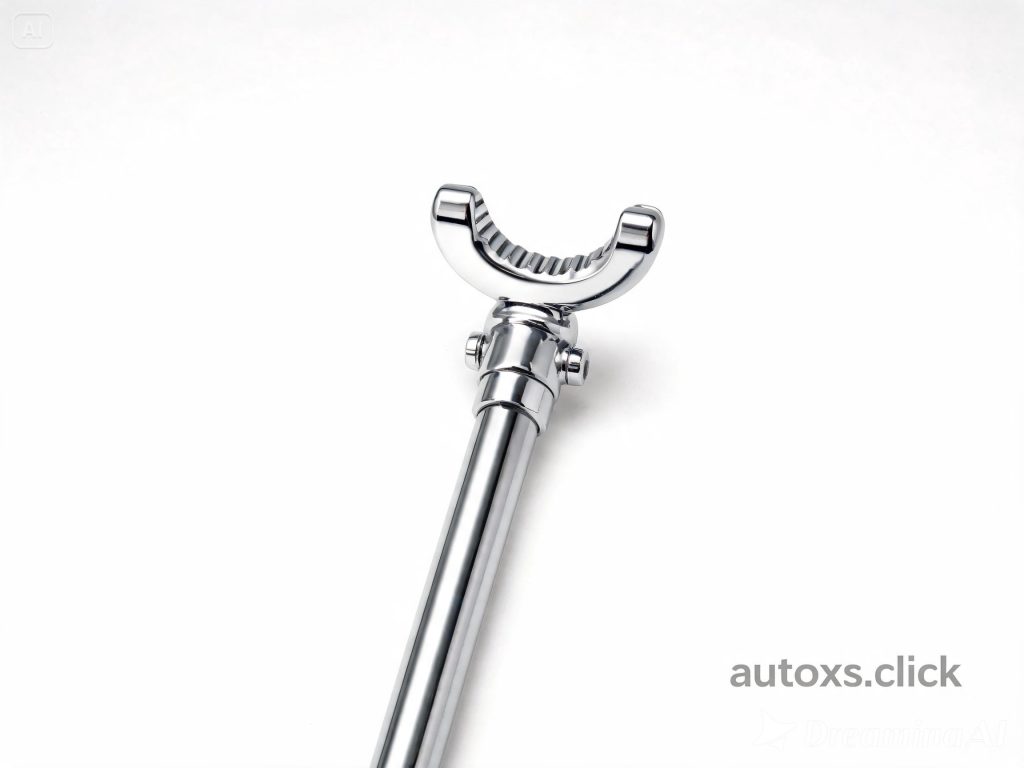
Mechanical Bridge – Standard Chrome Bridge Head + Extension Rod
May
Billiards is a sport defined not only by precision and control, but also by geometry and positioning. While many shots can be executed comfortably with a natural hand bridge, there are moments in every game where the cue ball rests beyond normal reach. In these situations, maintaining proper form becomes impossible without assistance. The Mechanical Bridge – Standard Chrome Bridge Head + Extension Rod is the professional solution designed to extend a player’s reach across the entire table, ensuring that no shot is compromised due to physical limitations.
The Role of the Mechanical Bridge in Modern Play
A mechanical bridge is a fundamental support tool in cue sports, used when the cue ball is positioned too far from the rail to allow a stable hand bridge. This situation occurs frequently in pool, snooker, and carom disciplines, particularly after safety exchanges or when balls are spread across the table.
Without a mechanical bridge, players are forced into awkward body positions—leaning excessively across the table or stretching beyond their natural range of motion. These adjustments introduce instability into the stroke and significantly increase the likelihood of missed shots. In some cases, they can even lead to physical strain on the shoulder, lower back, or wrist.
The mechanical bridge eliminates these issues by providing a stable, elevated guide for the cue. It allows players to maintain proper posture while still executing accurate strokes from otherwise unreachable positions.
Chrome Bridge Head: Stability and Precision Engineering
The bridge head is the core interface between the cue and the mechanical support system. In this model, it is constructed from polished chrome-plated steel, chosen for its combination of durability, smoothness, and resistance to wear.
The chrome surface plays a critical functional role. It provides a low-friction channel through which the cue can glide smoothly during the stroke. This reduces resistance and ensures that the cue follows a predictable path from start to finish. Because the surface is metal-based and polished, it does not degrade quickly, meaning the glide performance remains consistent over long-term use.
Multiple cue rest positions are integrated into the bridge head design. These notches allow players to adjust cue height depending on the type of shot being played. A lower channel is ideal for controlled follow shots, while higher positions are used for elevated or angled strokes. This flexibility allows the mechanical bridge to adapt to a wide variety of shot requirements without changing equipment.
Equally important is lateral stability. The bridge channels are shaped to guide the cue forward while minimizing side-to-side movement. This ensures that the cue remains aligned throughout the stroke, preserving shot accuracy even when using an external support system.
Extension Rod: Reach Without Compromise
The extension rod is what gives the mechanical bridge its full utility. Typically measuring between 48 and 54 inches, it provides the necessary length to reach across standard 7-foot, 8-foot, and 9-foot tables with ease.
Constructed from rigid materials such as chrome-plated steel or reinforced aluminum, the rod is engineered to remain completely stable under pressure. Flex or bending during use would introduce directional inconsistencies into the stroke, so structural rigidity is essential for maintaining accuracy.
The connection between the rod and bridge head is designed to be firm and secure, preventing wobble or rotation during play. Any instability at this junction would directly translate into cue misalignment, making precision shots significantly more difficult.
Proper Setup and Use Technique
Correct use of a mechanical bridge requires both positioning and stability. The bridge head is placed flat on the table surface, with the rod extending back toward the player. The supporting hand holds the rod steady, anchoring it against unwanted movement during the stroke.
The cue is then placed into the appropriate channel on the bridge head, allowing it to slide forward in a controlled motion. The stroke itself should replicate the natural pendulum motion used with a hand bridge, ensuring consistency in delivery mechanics.
One of the most important technical considerations is bridge stability under load. Even slight movement of the bridge head during the forward stroke can cause deflection at the cue ball impact point. For this reason, players are taught to maintain firm downward pressure on the bridge while keeping the guide path completely steady.
Strategic Importance in Competitive Play
The mechanical bridge is not merely a convenience tool—it plays an important strategic role in competitive billiards. Safety plays, defensive positioning, and long-distance cue ball control often result in layouts where natural bridging is impossible.
Without a mechanical bridge, players may be forced to attempt risky stretched shots or concede positional advantage. With it, they can execute precise, controlled shots from any location on the table, maintaining tactical integrity throughout the game.
This ensures that strategy remains the deciding factor rather than physical reach limitations.
Comparison to Improvised Solutions
Some inexperienced players attempt to substitute mechanical bridges with improvised methods such as extended hand bridges, cue supports, or unstable table-edge positioning. These methods are inherently unreliable because they lack structural consistency and often introduce unwanted movement.
A purpose-built mechanical bridge eliminates these risks by providing a stable, engineered platform specifically designed for cue guidance. This distinction is critical in higher-level play where precision margins are extremely small.
Snooker and Pool Applications
While mechanical bridges are used across multiple cue sports, their application varies slightly between disciplines. In pool, the standard flat bridge head is typically sufficient for most long-reach shots. In snooker, however, additional specialized bridge forms—such as elevated or arched supports—may be required for more complex ball configurations.
The standard chrome bridge remains a versatile tool that covers the majority of use cases across both recreational and competitive environments.
Maintenance and Longevity
One of the advantages of chrome-plated equipment is its low maintenance requirement. The bridge head should be occasionally wiped with a dry cloth to remove chalk residue and maintain smooth channel surfaces. This ensures that cue movement remains consistent and free of obstruction.
The extension rod should be stored carefully to prevent bending or impact damage. Since structural alignment is critical to performance, any deformation can reduce accuracy and should be avoided through proper handling and storage.
Conclusion
The Mechanical Bridge – Standard Chrome Bridge Head + Extension Rod is an essential tool for any serious billiards setup. By extending reach, stabilizing cue guidance, and maintaining stroke accuracy from difficult positions, it ensures that no shot is limited by physical distance alone.
In competitive play, where table layouts often demand precision from every angle, the mechanical bridge preserves both strategic options and technical consistency. It is not simply an accessory—it is a foundational part of a complete cue sports toolkit.
