
Post
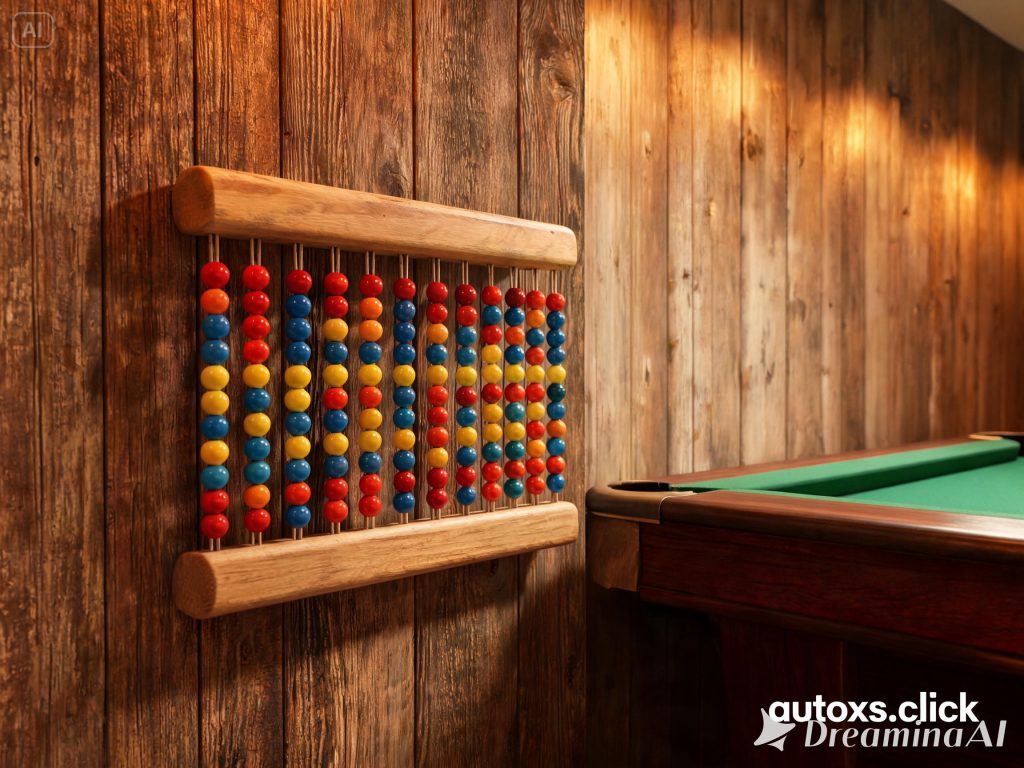
Billiard Scoring Counter – Hanging String Bead Score Counter Carom
May
Carom billiards is a discipline where precision, control, and consistency define every point scored. Unlike pocket billiards, where balls disappear into pockets, carom requires continuous tracking of scoring sequences over extended runs. In this context, accurate and immediate scorekeeping is essential to maintaining flow and focus. The Billiard Scoring Counter – Hanging String Bead Score Counter Carom provides a traditional, highly reliable scoring system that has been trusted in carom halls worldwide for generations.
While modern digital scoring systems exist, many carom players and institutions continue to prefer the bead counter because it integrates seamlessly into the rhythm and atmosphere of the game. It is not simply a scoring device — it is part of the identity of carom billiards itself.
The Historical Role of Bead Counters in Carom
The hanging bead scoring system has been used in carom billiards for well over a century, particularly in regions where the sport has deep cultural roots such as Belgium, France, South Korea, and Japan. Its longevity is a testament to its effectiveness and simplicity.
Unlike written scorekeeping or electronic displays, the bead system provides instant visual feedback that can be read from anywhere around the table. Players, referees, and spectators can all immediately understand the current match state without interruption or explanation.
This clarity is particularly important in carom disciplines such as three-cushion billiards, where matches are often played to fixed point totals and momentum can shift quickly during high-run sequences.
Design and Structural Composition
The scoring counter consists of a hanging frame system designed to attach along the long rail of a carom table. This placement ensures maximum visibility while keeping the scoring system completely clear of the playing surface.
The frame is typically constructed from durable materials such as wood or metal, chosen for both stability and aesthetic compatibility with professional billiard environments. The structure is designed to remain rigid during use while still being lightweight enough for easy installation and removal.
Suspended from the frame are scoring strings fitted with evenly spaced beads. These beads are designed for smooth movement and consistent spacing, ensuring that scoring adjustments can be made quickly without resistance or confusion.
How the Bead Scoring System Works
The mechanism behind the bead counter is straightforward but highly effective. Each player is assigned a dedicated string of beads, which represents their total score during the match.
After each successful scoring action in carom billiards — such as a completed carom or cushion sequence — the player advances one bead along the string. This creates a continuous, visual record of progress throughout the game.
The system typically includes a central divider that separates scored beads from remaining beads. This separation allows players and spectators to instantly determine the current score without counting individual beads.
The tactile nature of moving beads also provides a subtle rhythm to the game, reinforcing focus and helping players maintain awareness of scoring momentum.
Integration with Carom Game Formats
The bead counter is fully compatible with standard carom billiards formats, including straight rail, balkline, and three-cushion billiards. These formats commonly use match targets such as 20, 30, 40, or 50 points, depending on competition level and ruleset.
The counter is designed with sufficient bead capacity to accommodate typical match lengths while also supporting extended practice sessions or informal play without reset interruptions.
Because it provides a continuous running score, it is also useful for training environments where players focus on developing high-run consistency and tracking performance over time.
Clarity and Visibility During Play
One of the key advantages of the bead scoring system is its high visibility. The beads are sized and spaced so that scores can be read clearly from multiple positions around the table, even during active play.
This eliminates the need for verbal score confirmation or written tracking, allowing players to remain fully focused on shot execution. It also reduces disputes or confusion about current match status, which is especially important in competitive environments.
The use of contrasting bead colors for each player further enhances readability, ensuring that scores can be distinguished instantly even in fast-paced situations.
Installation and Table Integration
The scoring counter is designed for non-invasive installation on standard carom tables. It typically attaches to the long rail using hooks, brackets, or clamp-style fittings that do not damage the table surface.
This allows the system to be easily installed or removed depending on usage needs. In professional halls, bead counters are often permanently installed, while in home or club environments they may be added only during carom play sessions.
The elevated hanging position ensures that the system remains completely clear of cue movement and does not interfere with player stance or shot execution.
Durability and Long-Term Use
Built for repeated handling, the bead counter is designed to withstand long-term use in both recreational and competitive environments. The beads are typically made from durable materials such as polished wood or reinforced polymer, ensuring smooth sliding action over time.
The stringing system is engineered to resist fraying or stretching, maintaining consistent bead spacing and movement reliability even after extended use.
With minimal maintenance requirements, the system remains functional and visually consistent for years, making it a dependable fixture in any carom setup.
Aesthetic and Cultural Significance
Beyond functionality, the bead counter contributes significantly to the visual identity of carom billiards. Its presence immediately signals a dedicated, professional-level playing environment.
In traditional billiard halls, the sight of hanging bead counters is closely associated with serious play, concentration, and competitive atmosphere. It reinforces the heritage and discipline of the sport, distinguishing carom from casual recreational pool setups.
For spectators, the bead counter also enhances engagement by making scoring progression visible and intuitive, allowing audiences to follow match dynamics in real time without explanation.
Conclusion
The Billiard Scoring Counter – Hanging String Bead Score Counter Carom remains one of the most elegant and effective scoring systems in cue sports. Its simplicity, reliability, and historical authenticity make it an indispensable part of serious carom billiards setups.
By providing clear visual scoring, seamless integration with gameplay, and long-term durability, it enhances both the practical and cultural experience of the game. In a sport defined by precision and tradition, the bead counter stands as a timeless and essential tool.
