
Post
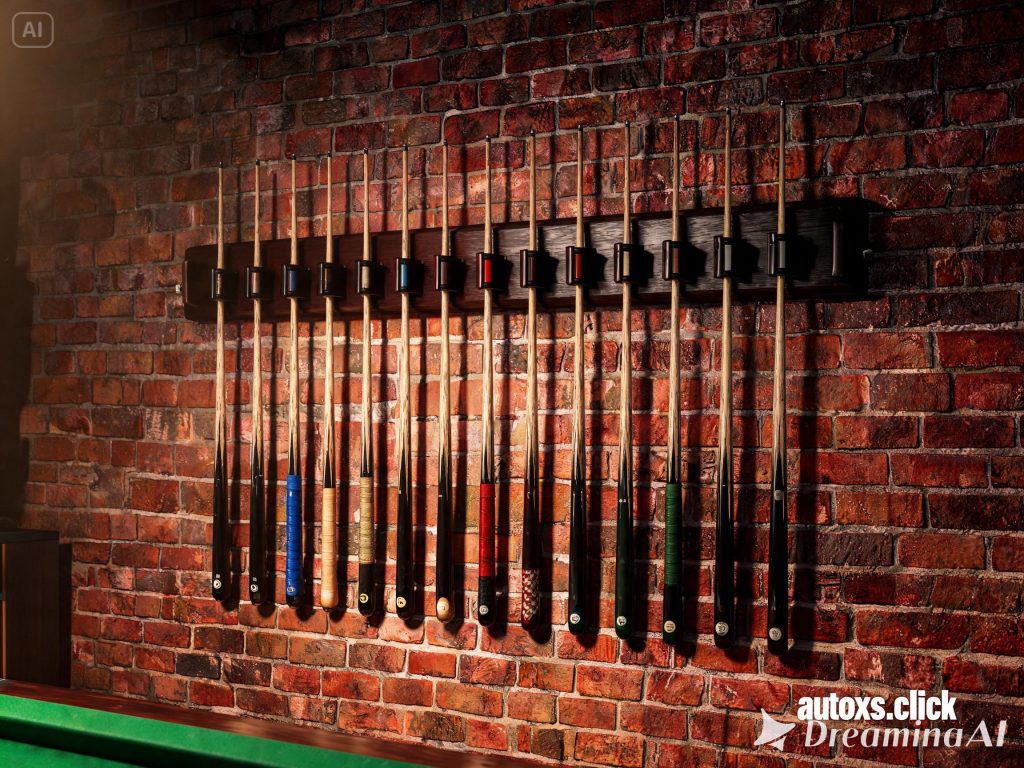
Billiard Cue Rack – Wall-Mount 12-Cue Display Rack
May
A collection of fine billiard cues represents both a financial investment and a reflection of a player’s commitment to the game. Each cue is a precision instrument, and like any finely tuned tool, it requires proper storage to maintain its straightness, finish, and long-term performance. The Billiard Cue Rack – Wall-Mount 12-Cue Display Rack provides a structured, protective, and visually refined solution designed specifically for serious players, clubs, and dedicated billiard rooms.
Leaving cues leaned against walls, placed on tables, or stored loosely in corners introduces unnecessary risks. Over time, these practices can lead to warping, surface scratches, joint misalignment, and general wear. A proper cue rack eliminates these issues by ensuring each cue has a fixed, secure, and protected position when not in use.
Wall-Mounted Storage: Stability and Space Efficiency
The defining feature of this rack is its wall-mounted design, which offers significant advantages over floor-standing storage systems. By attaching directly to a wall, the rack removes cues from high-traffic areas around the billiard table, reducing the risk of accidental impact or tipping.
This design also improves spatial efficiency. In many home game rooms or club environments, floor space around the table is limited and must remain clear for comfortable cue movement. A wall-mounted rack keeps cues organized without occupying valuable playing area.
Another key benefit is accessibility. Mounted at an appropriate height, the rack allows players to quickly identify, select, and return cues without bending or searching through cluttered storage areas. This improves overall workflow during play sessions and maintains a clean, organized environment.
12-Cue Capacity: Versatility for Serious Setups
The 12-cue capacity makes this rack suitable for both personal and semi-professional environments. A dedicated player often owns multiple cues for different purposes — including playing cues, break cues, jump cues, and backup options. Clubs or shared spaces may also maintain multiple house cues for guests and members.
With space for up to twelve cues, the rack supports a wide range of use cases while still allowing room for future expansion. Each cue is assigned its own individual slot, ensuring separation and preventing contact between shafts or butt sections.
This separation is important because even minor contact between cues during storage can lead to cosmetic damage such as scratches or finish wear. Proper spacing preserves both appearance and long-term structural integrity.
Material Quality and Protective Design
The rack is typically constructed from high-quality hardwood or engineered wood, chosen for both structural stability and aesthetic compatibility with billiard environments. Wood provides a balanced combination of strength and surface gentleness, ensuring cues are held securely without abrasive contact.
Each cue slot is often lined with soft protective materials such as felt or foam padding. These contact points are critical because they prevent direct friction between the cue and the rack surface. The shaft-contact areas are especially important, as even minor surface imperfections can affect stroke smoothness during play.
This protective lining ensures that cues remain in pristine condition even after long periods of storage, preserving both their finish and functional performance.
Horizontal Storage for Cue Preservation
The rack is designed to store cues in a horizontal orientation, which is widely considered the most stable long-term storage position for maintaining cue straightness.
When cues are stored vertically for extended periods, gravitational forces can subtly affect the balance between the butt and shaft sections. Over time, this may contribute to slight warping or alignment shifts, particularly in wooden cues sensitive to environmental conditions.
Horizontal storage distributes weight evenly along the full length of the cue, minimizing stress points and helping preserve straightness. This makes it the preferred method for serious players who prioritize long-term equipment integrity.
Organized Display and Visual Presentation
Beyond its functional role, the cue rack also serves as a visual display system. A neatly arranged set of cues mounted on the wall creates a professional and intentional aesthetic that enhances the overall atmosphere of a billiard room.
This display effect is particularly valuable in dedicated game rooms or club environments, where presentation contributes to the perceived quality of the space. A well-organized cue rack communicates care, structure, and respect for the game.
It also improves usability. With all cues visible at once, players can easily compare weight, style, or purpose before selecting the appropriate cue for a specific shot or game format.
Installation and Mounting Requirements
Proper installation is essential for safe and reliable use. The rack should be mounted securely to wall studs or reinforced anchors capable of supporting the combined weight of the rack and all stored cues.
Because a fully loaded rack can carry significant weight, stable mounting ensures long-term durability and prevents shifting or loosening over time. Most installations position the rack so that cues are easily accessible while remaining safely above floor-level activity zones.
Ensuring the rack is level during installation is important, as even slight tilting can cause cues to shift within their slots over time.
Protection Against Accidental Damage
One of the most important advantages of a dedicated cue rack is protection from accidental damage. Cues left leaning against walls or furniture are vulnerable to being knocked over, stepped on, or warped due to uneven pressure points.
A fixed rack eliminates these risks by providing secure, designated positions for each cue. This ensures that cues remain stable and protected regardless of activity in the room.
For households with children or pets, this protection becomes even more valuable, as it prevents unintentional damage to expensive equipment.
Long-Term Equipment Preservation
Proper cue storage directly affects long-term performance. Maintaining straightness, protecting finish quality, and preventing joint wear all contribute to a cue’s consistency over time.
A well-designed rack helps extend the usable life of cues by minimizing exposure to environmental and physical risks. This reduces maintenance needs and helps preserve the playing characteristics that players rely on for accuracy and control.
Conclusion
The Billiard Cue Rack – Wall-Mount 12-Cue Display Rack is an essential organizational and protective solution for any serious billiard environment. By combining secure storage, horizontal cue preservation, and professional visual presentation, it enhances both the functionality and aesthetics of the space.
For players who value their equipment, proper storage is not optional — it is part of responsible ownership. This rack ensures that every cue remains protected, accessible, and presented in a way that reflects the quality of the game itself.
