
Post
Cue Tip Tool – 3-in-1 Billiard Tip Shaper Tapper and Scuffer
May
A billiard cue tip is one of the smallest physical components in cue sports, yet it has one of the greatest impacts on performance. Every spin, every controlled draw, and every precise follow shot depends on the condition of this small leather surface. The Cue Tip Tool – 3-in-1 Billiard Tip Shaper Tapper and Scuffer is designed to maintain that critical interface, combining three essential maintenance functions into a single compact instrument that supports consistent, high-level play.
While often overlooked by beginners, experienced players understand that cue tip condition is directly tied to shot reliability. A well-maintained tip ensures predictable cue ball response, consistent spin transfer, and reduced miscue risk. Without regular maintenance, even a premium tip gradually loses its effectiveness and becomes a limiting factor in performance.
The Importance of Cue Tip Condition
The cue tip acts as the final point of contact between the player and the cue ball. Its shape and surface texture determine how force and spin are transferred during impact. When properly maintained, the tip has a controlled dome shape that allows for precise contact across different strike points on the cue ball.
Over time, repeated impacts naturally compress the leather fibers, causing the tip to flatten. In addition, chalk buildup and repeated friction can create a glazed surface that becomes overly smooth. This glazing reduces friction between the tip and cue ball, increasing the likelihood of miscues, especially during off-center strikes used for spin control.
Without intervention, these changes gradually degrade shot quality. Players may notice reduced spin effectiveness, inconsistent cue ball reaction, or a need to strike harder to achieve the same result. Proper maintenance restores the tip to its intended playing condition.
Understanding the 3-in-1 Maintenance System
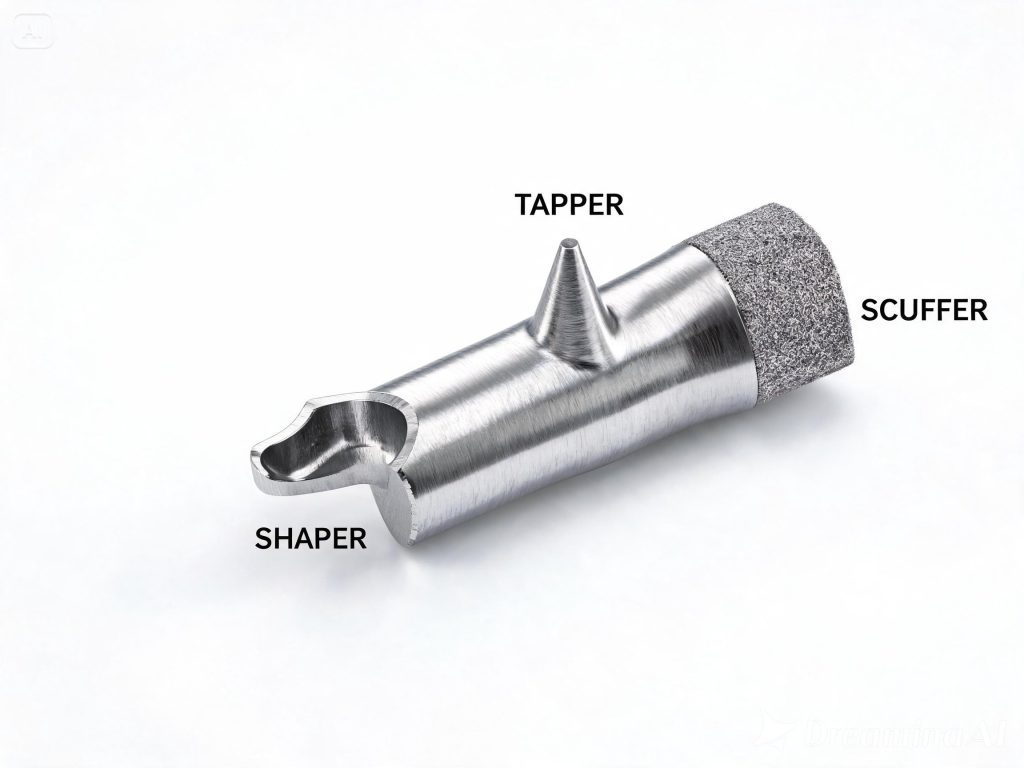
The strength of this tool lies in its integration of three distinct maintenance functions: shaping, tapping, and scuffing. Each function addresses a different aspect of cue tip performance, allowing players to maintain optimal condition without needing multiple separate tools.
Tip Shaper: Restoring Geometry
The shaping function is responsible for restoring the cue tip’s dome profile. A properly shaped tip is slightly rounded, similar in curvature to a coin, allowing for controlled contact across different areas of the cue ball.
When a tip becomes flat, contact becomes less precise and spin control is reduced. The shaper uses a curved abrasive surface to gently remove excess material from the edges of the tip, gradually restoring its rounded form. This process ensures that the tip maintains its intended geometry for accurate shot execution.
Proper shaping is not about aggressive material removal but about restoring balance. Over-shaping can shorten tip lifespan, so the process should be performed carefully and only when the profile visibly flattens.
Tip Tapper: Enhancing Density and Grip
The tapping function improves the internal structure of the tip by compressing and conditioning the leather fibers. This process strengthens the tip and increases its ability to hold chalk effectively.
When a tip is tapped, small surface indentations are created that improve chalk adhesion. This increases friction during cue ball contact, reducing the chance of miscues during spin-heavy shots. The tapper also helps maintain a firmer feel, ensuring consistent feedback during impact.
Unlike shaping, which removes material, tapping works by modifying internal structure without altering overall geometry. It is particularly useful when a tip begins to feel too soft or inconsistent during play.
Tip Scuffer: Restoring Surface Texture
The scuffing function addresses surface glazing, which occurs when the tip becomes too smooth from repeated contact with the cue ball. A smooth tip surface reduces chalk retention, weakening friction at the moment of impact.
The scuffer uses a fine abrasive surface to lightly roughen the tip, opening its pores and increasing surface texture. This improves chalk retention and restores the grip necessary for reliable spin transfer.
Unlike the shaper, the scuffer does not significantly alter tip geometry. Instead, it focuses on surface conditioning, making it ideal for quick maintenance during or between sessions.
Integrated Design and Portability
The 3-in-1 design consolidates all three maintenance functions into a single compact tool, making it highly portable and convenient for regular use. Its small size allows it to be stored easily in a cue case, pocket, or accessory pouch without adding bulk.
This portability ensures that players always have access to proper tip maintenance tools, whether at home, in practice sessions, or during competitive play. Quick access is particularly important because tip condition can change gradually during a session, and immediate correction helps maintain consistent performance.
Many designs also include protective casing or folding mechanisms to prevent the abrasive surfaces from damaging other equipment inside the cue case.
Recommended Maintenance Practices
Proper usage frequency depends on playing conditions and intensity. Scuffing can be performed regularly before sessions to ensure optimal chalk adhesion. Shaping should be done less frequently, only when visible flattening occurs in the tip profile. Tapping can be used periodically to restore firmness and maintain structural consistency.
Overuse of shaping tools should be avoided, as excessive material removal reduces overall tip lifespan. The goal of maintenance is to preserve performance, not to continuously reshape the tip.
Players who integrate regular tip care into their routine often experience more consistent cue ball control and fewer unexpected miscues during play.
Compatibility Across Cue Types
The 3-in-1 tool is designed for universal compatibility across most cue sports disciplines. It works effectively with a wide range of tip sizes commonly found in pool, snooker, and carom billiards.
Whether used on smaller snooker tips or larger pool and carom tips, the tool’s shaping and scuffing surfaces are designed to accommodate standard dome profiles without requiring adjustment.
Impact on Game Performance
Maintaining a properly conditioned cue tip has a direct effect on gameplay consistency. A well-shaped and properly textured tip allows for more reliable spin application, improved shot control, and reduced variability between strokes.
Players often notice that a well-maintained tip feels more responsive and predictable, particularly on delicate positional shots where precise cue ball behavior is required.
Because cue tip condition directly influences the accuracy of spin transfer, regular maintenance contributes not only to technical consistency but also to overall confidence during play.
Conclusion
The Cue Tip Tool – 3-in-1 Billiard Tip Shaper Tapper and Scuffer is a compact but essential accessory for any serious billiards player. By combining shaping, tapping, and scuffing functions into a single tool, it ensures that cue tips remain in optimal playing condition at all times.
Consistent tip maintenance leads to more reliable spin control, improved shot accuracy, and longer tip lifespan. In a game where precision is everything, maintaining the smallest point of contact between cue and ball becomes a critical part of long-term performance improvement.
