
Post
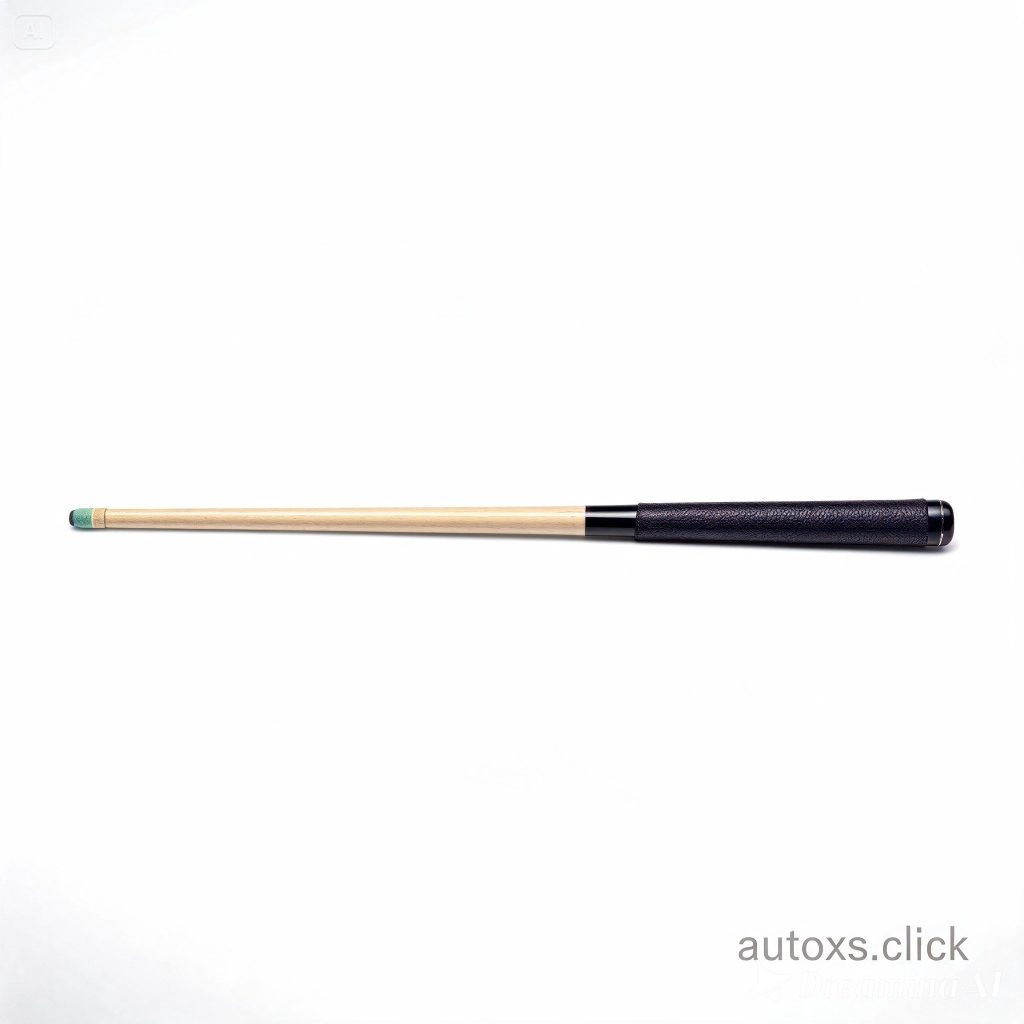
Jump Cue – Short Shaft Fiber Jump Stick
May
In modern pool, tactical safety play has become more advanced than ever before. Players no longer rely solely on offensive shot-making — they also use precise defensive positioning to hide the cue ball behind blockers and force difficult escapes. In these moments, the jump shot becomes one of the most valuable weapons in a player’s arsenal. The Jump Cue – Short Shaft Fiber Jump Stick is specifically engineered to help players overcome impossible-looking situations with explosive elevation, precise control, and professional-level consistency.
Unlike standard playing cues, which are designed for all-around shot-making and cue ball control, a jump cue is built for one highly specialized purpose: lifting the cue ball cleanly over an obstacle ball while maintaining accuracy and legal contact. This requires a unique combination of shaft length, tip hardness, cue weight, and structural rigidity — all of which have been carefully optimized in this dedicated jump stick.
The Evolution of the Jump Cue in Modern Pool
Decades ago, jump shots were considered novelty shots rarely attempted outside of exhibitions. Most players relied entirely on kick shots to escape safeties because standard cues were not capable of producing consistent jumps without risking damage or miscues. As competitive pool evolved and defensive strategy became more sophisticated, manufacturers began developing specialized equipment specifically designed for airborne cue ball control.
Today, jump cues are considered essential equipment in many forms of professional pool, especially 9-ball and 10-ball. Tournament players routinely face complex safety situations where kicking multiple rails carries too much risk. A properly executed jump shot can instantly reverse the pressure of a defensive situation and create a direct offensive opportunity.
The Short Shaft Fiber Jump Stick reflects this evolution in cue technology. Every element of its construction is focused on maximizing jump efficiency while remaining comfortable, controllable, and tournament-ready.
Why Standard Playing Cues Struggle with Jump Shots
Many casual players attempt jump shots using their regular playing cues, but this approach creates several mechanical disadvantages. A standard cue measures approximately 57 to 58 inches in length, making it difficult to elevate the butt section steeply enough for efficient jump mechanics. At high elevation angles, the long butt section interferes with body positioning and restricts stroke freedom.
More importantly, playing cues are optimized for finesse, spin generation, and smooth cue ball contact — not for the abrupt downward impact required during jump execution. Repeated jump attempts with a standard cue can damage softer leather tips, stress wooden shafts, and even loosen joint systems over time.
A dedicated jump cue eliminates these problems entirely. Its compact size, rigid construction, and specialized tip geometry allow players to elevate naturally and deliver a fast, downward punch without risking damage to their primary playing equipment.
Compact Shaft Design for Maximum Control
The defining feature of this cue is its short overall length of approximately 30–40 inches, depending on configuration. This compact design dramatically improves maneuverability during elevated shots.
With a shorter cue, players can comfortably raise the butt section to steep angles — often between 30 and 60 degrees — while still maintaining precise directional alignment. The reduced length also allows for faster acceleration through the cue ball, a critical factor in generating clean lift.
Because jump shots rely heavily on speed and impact efficiency rather than long stroke mechanics, the shorter cue actually increases control instead of reducing it. Players experience:
- Faster cue acceleration
- Improved elevation comfort
- More accurate downward striking angles
- Better cue ball trajectory control
- Reduced interference with body movement
This design is especially beneficial during tight table situations where space around the rail may be limited.
Multi-Section Versatility
One of the most practical features of the Short Shaft Fiber Jump Stick is its modular construction. Many versions are designed with two-piece or three-piece assembly systems, allowing players to adjust cue length depending on the jump shot being attempted.
For shorter, steeper jumps over nearby blockers, players may use the most compact configuration for maximum elevation and speed. For longer-distance jumps requiring a flatter trajectory, the additional extension section provides extra stability and directional control.
This versatility allows the cue to adapt to virtually every jump-shot scenario encountered during competition:
- Close-range vertical jumps
- Long-distance airborne shots
- Rail jump escapes
- Partial-ball jump cuts
- Jump-and-draw specialty shots
Rather than carrying multiple specialty jump cues, players gain broad shot-making flexibility from a single professional-grade tool.
Fiber Composite Construction for Extreme Durability
Jump shots create impact forces very different from normal pool strokes. During a jump shot, the cue strikes downward into the cue ball with substantial force over an extremely short contact duration. These repeated shock loads place enormous stress on the shaft structure.
Traditional wooden shafts can eventually weaken, crack, or split under this type of repeated impact stress. This is why the fiber composite construction of this jump cue is such a major advantage.
Built from reinforced fiberglass or advanced carbon composite materials, the shaft is engineered specifically to absorb and distribute impact energy efficiently without structural fatigue. Fiber materials offer several important benefits:
- High resistance to cracking and warping
- Excellent structural rigidity
- Low maintenance requirements
- Resistance to humidity and temperature changes
- Long-term durability under repeated jump use
Unlike wood, fiber composites remain stable regardless of climate conditions. Whether you play in humid billiard halls, air-conditioned tournament rooms, or changing seasonal environments, the cue maintains consistent performance characteristics.
Lighter Weight for Faster Cue Speed
Another major advantage of fiber construction is reduced overall mass. A lighter jump cue allows players to accelerate the shaft more rapidly during the stroke, generating greater cue speed with less physical effort.
In jump shots, cue speed is critical because it directly influences:
- Jump height
- Cue ball lift speed
- Obstacle clearance
- Shot distance capability
- Trajectory sharpness
The lightweight design also reduces arm fatigue during long practice sessions. Players can repeat jump drills comfortably while maintaining consistent stroke mechanics.
Experienced jump specialists often describe lighter fiber jump cues as feeling “explosive” because they accelerate so quickly through the hitting zone.
Phenolic Tip Technology
The cue is equipped with a very hard phenolic or ultra-hard compressed leather tip, specifically selected for jump performance. This tip hardness is absolutely essential for effective cue ball elevation.
Soft playing tips compress heavily during impact, absorbing energy that should instead transfer into the cue ball. Jump cues require the opposite behavior: minimal compression and maximum energy transfer.
The extremely hard tip produces:
- Cleaner downward force transmission
- Higher cue ball lift
- Reduced energy loss
- More consistent jump response
- Lower risk of miscues during elevated contact
Because the contact time between tip and cue ball is so brief, the cue ball “pops” upward rapidly while still moving forward toward the target line.
The hardness of the tip also helps maintain legal contact standards in organized competition by reducing excessive grabbing or scooping behavior.
Improving Jump Shot Technique
Owning a quality jump cue is only part of the equation — proper technique is equally important. Fortunately, the Short Shaft Fiber Jump Stick makes correct mechanics easier to learn because its design naturally supports efficient movement.
Players should begin by practicing simple low-height jumps over small obstacles such as chalk cubes or spare balls. Focus areas include:
- Maintaining a firm bridge
- Using a short accelerating stroke
- Striking slightly below center cue ball
- Keeping the stroke compact and explosive
- Avoiding slow “pushing” motions
As skill improves, players can experiment with:
- Different elevation angles
- Variable contact points
- Distance jumps
- Controlled jump position play
- Jump combinations and masse escapes
With practice, jump shots become far more than desperation escapes — they evolve into legitimate offensive weapons capable of turning defense into immediate opportunity.
Ideal for Competitive and Recreational Players
The Jump Cue – Short Shaft Fiber Jump Stick is suitable for a wide range of players, including:
- League competitors
- Tournament players
- Advanced recreational players
- 9-ball and 10-ball specialists
- Players developing modern safety escape systems
Even casual players quickly appreciate the confidence boost that comes from having a reliable jump option available during difficult layouts.
Conclusion
The Jump Cue – Short Shaft Fiber Jump Stick transforms one of pool’s most difficult specialty shots into a repeatable, reliable skill. Through its compact design, fiber composite durability, ultra-hard tip technology, and professional-level engineering, this cue provides players with the precision and explosive lift needed to execute legal jump shots consistently under pressure.
Whether you are escaping advanced safeties, attacking impossible layouts, or simply expanding your shot-making arsenal, this dedicated jump cue delivers the control, power, and confidence required to elevate your game — literally and competitively.
